

Data Center Operations Management
Real-time monitoring, IT/OT integration, and operational efficiency.
Modern data centers must ensure business continuity, infrastructure resilience, and energy efficiency in an environment of increasing technological complexity.
Factory Software supports data center operations with AVEVA solutions for real-time monitoring and advanced operational data analytics.
Managing increasingly complex data centers
AI, edge computing, and cloud are accelerating the growth of data centers, increasing power density and operational complexity.
Managing this infrastructure requires a new operating model capable of integrating power infrastructure, cooling systems, and IT platforms into a unified operational view.
An integrated operations approach transforms technical data into actionable insights, improving resilience, efficiency, and operational control over time.
Data center operational challenges
Business continuity as a top priority.
In a data center, an unplanned outage can have significant economic and reputational impacts. As power density and critical loads increase, ensuring infrastructure resilience becomes increasingly complex.
Seemingly isolated events can have ripple effects across electrical systems, cooling, and IT environments, making it more difficult to prevent or contain critical situations.
Ensuring uptime today means managing the interdependencies between increasingly complex systems.
Many systems, little integrated visibility.
A modern data center integrates BMS, UPS, power monitoring, HVAC, DCIM, and security platforms. These environments are often implemented at different times and with disparate technologies.
When they operate in isolation, the overall view becomes fragmented. Alarms are not contextualized, root cause analysis takes time, and collaboration between IT and operations teams becomes more difficult.
Complexity is not only technical, but also organizational and decision-related.
Energy efficiency as a strategic lever.
Energy and cooling represent a significant portion of a data center’s operating costs, especially in high-density environments. At the same time, sustainability and environmental impact reduction are becoming priority goals.
Without a clear view of operational performance, it becomes difficult to identify inefficiencies, optimize capacity utilization, or plan future infrastructure evolution.
Energy efficiency and operational performance are closely interconnected.
Growing without losing control.
Growing demand, driven by AI, edge computing, and cloud adoption, is leading many operators to rapidly expand their infrastructures or manage data centers across multiple locations.
Each new site introduces technical and organizational variables that increase operational complexity. Without consistent governance, scalability can lead to operational fragmentation.
The real challenge is not just to grow, but to govern growth over time.
Integrated approach to data center operations management
Addressing the operational challenges of modern data centers requires a management model that integrates electrical infrastructure, cooling systems, and IT platforms into a single operational view.
A Data Center Operations Management approach unifies infrastructure monitoring with operational data analytics, turning technical information into actionable decision support.
This model is based on two key elements: real-time monitoring and control of infrastructure and advanced data analytics to improve resilience, energy efficiency, and data center performance.
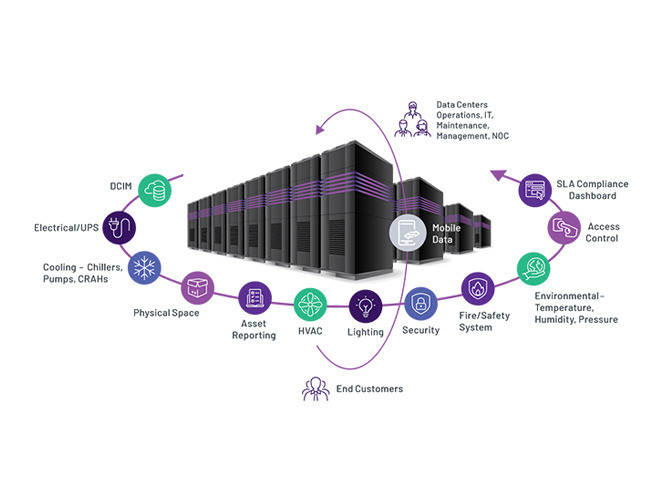
SCADA and DCIM in the data center: distinct roles, integrated value
In the data center context, it is important to distinguish between:
SCADA (Supervisory Control and Data Acquisition)
- Real-time monitoring
- Alarm management
- Critical infrastructure control (UPS, PDUs, HVAC, sensors)
DCIM (Data Center Infrastructure Management)
- IT asset inventory
- Capacity management
- Rack, power, and cooling relationships
SCADA keeps the infrastructure operational in real time, while DCIM supports planning and capacity optimization over time.
The real value comes from the integration of SCADA, DCIM, and building automation systems.
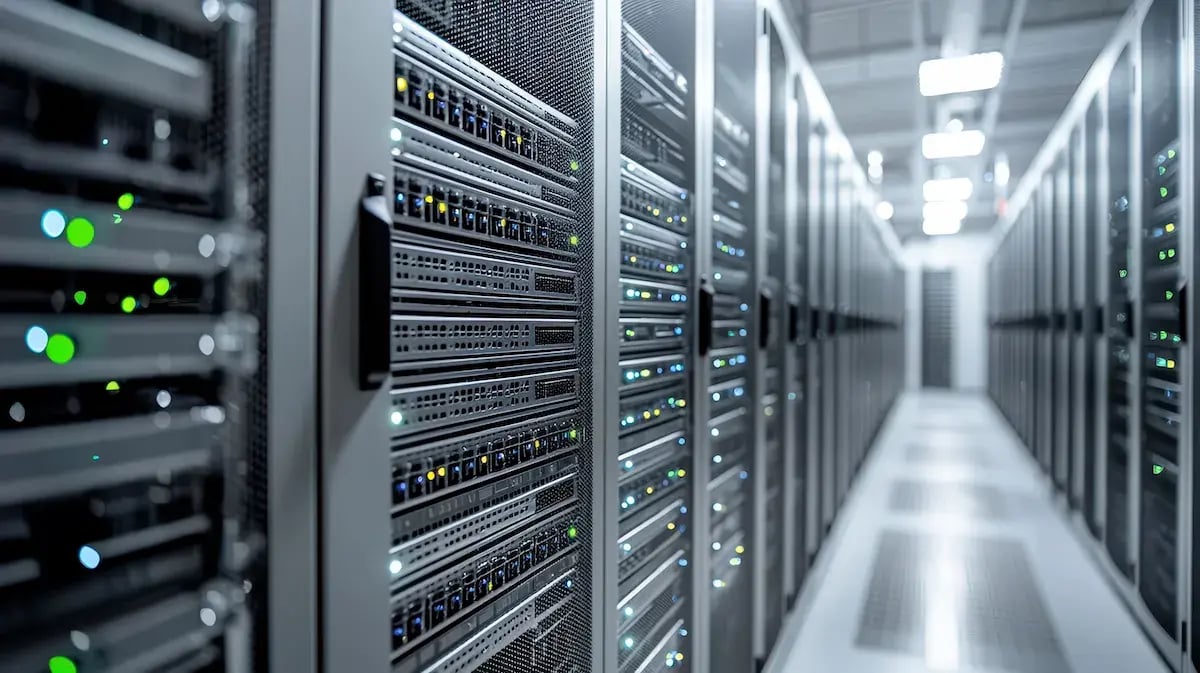
Real-time monitoring and control of infrastructure
To ensure business continuity and resilience, it is critical to have a unified view of the infrastructure that makes up a data center: electrical systems, cooling, security, and IT platforms.
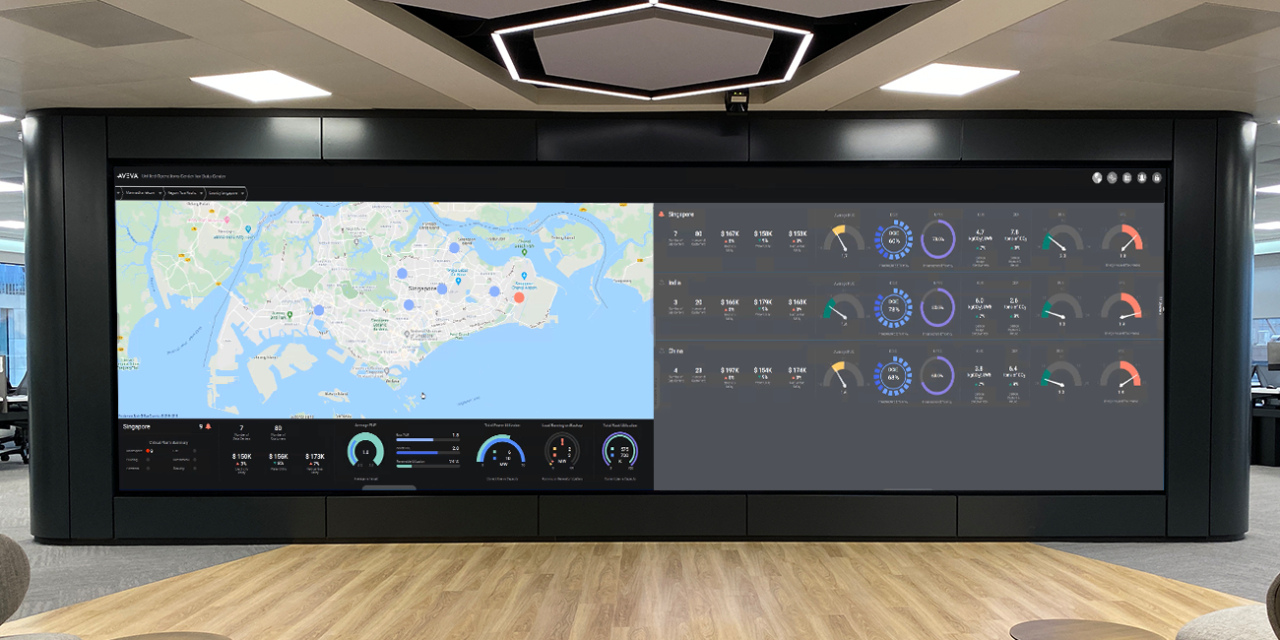
AVEVA Unified Operations Center integrates and monitors these systems within a single operations platform, providing a centralized view of operations and enabling the correlation of events from different sources.
Through operational dashboards and supervisory tools, operators can improve alarm management, coordinate operations teams, and maintain control of infrastructure even across multi-site environments.
Data analytics to improve efficiency and resilience
Data centers generate large volumes of data from sensors, monitoring systems, and energy infrastructure. Analyzing this data is essential to identify inefficiencies, improve performance, and anticipate potential anomalies.
AVEVA PI Vision enables real-time visualization and analysis of operational data, helping operators identify anomalous patterns and continuously improve infrastructure performance.
With advanced visualization tools and data analytics, organizations can improve energy efficiency, support predictive maintenance strategies, and make data-driven decisions.
They say about us:
Shawn Tugwell
Senior Data Center Engineering Manager, PayPal
Operational Applications in Data Centers
IT/OT Convergence
The convergence of IT and operations environments requires an operating model capable of unifying information, events, and processes.
An integrated system enables organizations to:
- Contextualize IT events within the physical infrastructure
- Enable structured escalation workflows
- Track interventions and responsibilities
- Reduce mean time to resolution (MTTR)
This improves team collaboration and increases operational transparency.
Energy Optimization
The availability of energy data alone is not sufficient without integrated analysis tools.
Through real-time KPIs and historical analysis, organizations can:
- Monitor electrical loads and cooling performance
- Compare performance across different sites
- Identify inefficiencies
- Support capacity planning decisions
Energy optimization thus becomes an integral part of data center operations management, not just a sustainability objective.
Integrated Power and Cooling
In a data center, power supply and HVAC systems are closely interconnected: an event affecting one subsystem can impact other areas of the infrastructure.
Integration between:
- UPS / DRUPS
- PDUs and rack PDUs
- HVAC systems, CRACs, and CRAHs
- Environmental sensors
enables alarms to be contextualized and abnormal patterns to be identified before they escalate into operational disruptions.
Integrating power and cooling improves infrastructure resilience and helps prevent downtime.
Multi-site Monitoring
Managing distributed infrastructure requires a unified view that enables centralized monitoring of multiple data centers in real time, while maintaining the ability to analyze each individual facility or area.
An integrated approach enables organizations to:
- Aggregate data from BMS, electrical systems, DCIM, and security platforms
- Visualize global dashboards with drill-down by site, room, or rack
- Standardize KPIs and escalation models
- Coordinate teams across multiple sites
This approach reduces operational fragmentation and improves overall infrastructure governance.
AVEVA Software Solutions for Data Centers
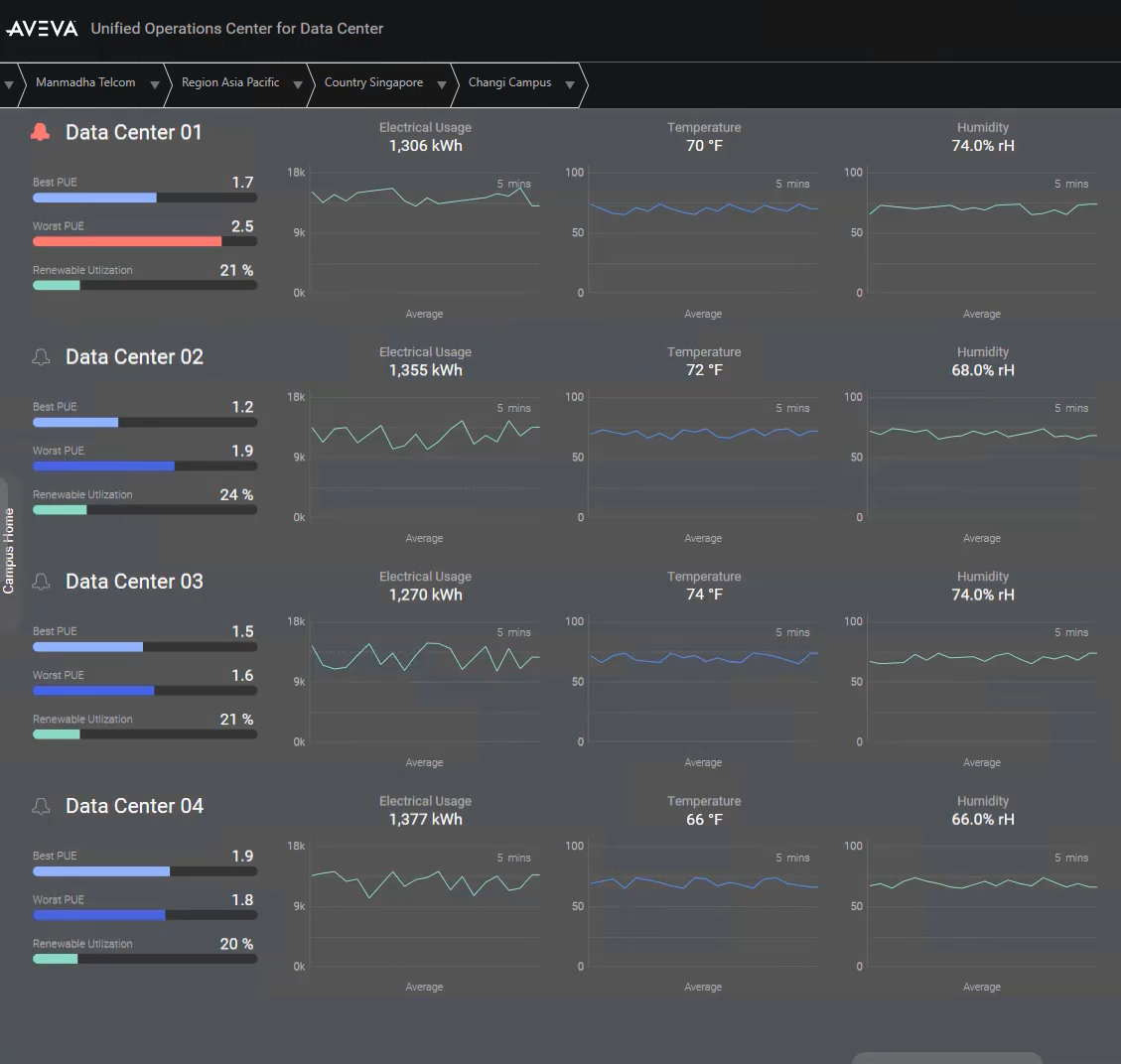
Unified Operation Center
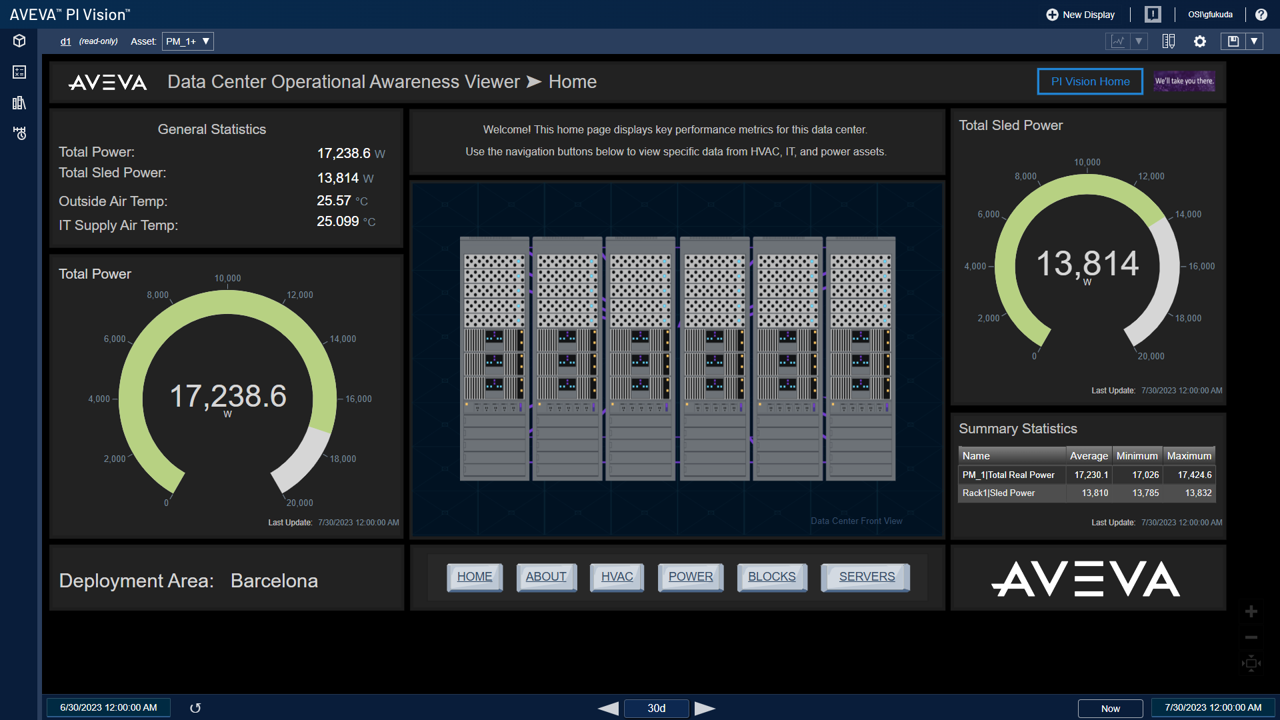
AVEVA PI Vision