

Maastricht A2-tunnel
Plant SCADA at the Heart of Europe’s First Double-Decker Tunnel
The A2 Motorway near the Dutch city of Maastricht has long been an important route for through traffic to and from Belgium, Germany and France. As the gateway to Southern Europe, it has been a source of major traffic congestion for some time. Add local traffic to the mix and that translates to around 45,000 vehicles using the Motorway every day.
However, since the opening of the Koning Willem-Alexander tunnel in December 2016, approximately 80% of the peak-hour congestion has been diverted, with the cross-city bypass now taking five minutes instead of more than 30.
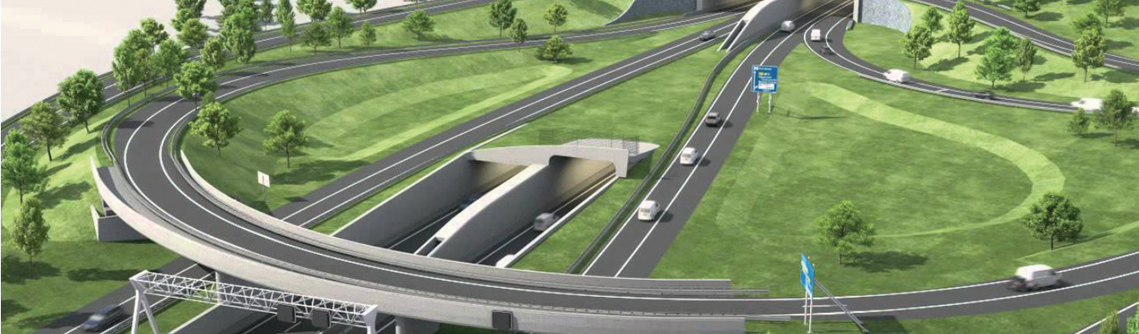
Taking five years to build, the 2.3km tunnel is the first of its kind in Europe, with four tunnel tubes stacked on top of each other, effectively separating local from transit traffic. The realisation of the project was also part of an integrated sustainability plan for the city, allowing the community to claim back the ‘parklaan,’ or green space, on top of the tunnel. Replacing the original highway with 2,000 trees not only offered an idyllic green avenue for pedestrians and cyclists, as well as property and economic opportunities for the community but more importantly reconnected a previously divided city.
Objectives
- Deploy a complete automation and energy distribution system for Europe’s first dual-level tunnel
- Supervise operational and safety systems for more than 45,000 vehicles per day
- Comply with the National Tunnel Standard requirements
- Ensure high availability and real-time redundancy
- Deliver a fast and ergonomic HMI environment
- Integrate advanced SCADA and emergency escalation workflows
- Support the city’s sustainability and infrastructure modernization plan
- Deliver the project on time and within budget
Solutions
The AVEVA solutions enabled the project teams to:
- Deploy AVEVA Plant SCADA as the central tunnel monitoring and control platform
- Manage the tunnel automation and energy distribution systems
- Supervise operational and safety systems in real time
- Deliver advanced SCADA functionalities and emergency workflows
- Ensure high availability and redundant industrial supervision
- Provide an ergonomic and high-performance HMI environment
Results
-
Schneider Electric selected as the end-to-end solution partner, managing the complete automation and energy distribution systems for the tunnel
-
The tunnel control system successfully satisfies the more than 10,000 requirements of the National Tunnel Standard
-
Project successfully delivered on time and on budget, with 80% of the peak-hour traffic congestion successfully diverted
They Talk About It
Hans van Engelen
Project Manager, Traffic & Tunnel Technical Installations (VTTI) Software, Avenue2
Maaike Nieuwenhuis
Business Development Manager, AVEVA
Stringent New Tunnel Standards
The A2 tunnel project was carried out by the Avenue2 Consortium, consisting of construction engineering company Ballast Nedam and contractor Strukton, following a comprehensive planning period. Collectively there was a regular staff of more than 50, with over 500 contractors working on the project day to day. The unique and complex design of the tunnel resulted in the Dutch Ministry of Infrastructure and the Environment introducing a new National Tunnel Standard (the Landelijke Tunnel Standard “LTS”) to ensure the highest standards of safety and security were adhered to. As a result, more than 50 different traffic and tunnel management technical installations were implemented in accordance with the new “LTS” standard. Each ensuring smooth traffic flow, preventing and detecting incidents, as well as ensuring measures were in place for timely responses to emergencies. However operating these 50+ subsystems including energy supply, lighting, ventilation, emergency stations, CCTV surveillance, fire alarm systems and more – presented a number of complexities. AVEVA Software Provides Flexible MES Solution
An Integrated Tunnel Control System
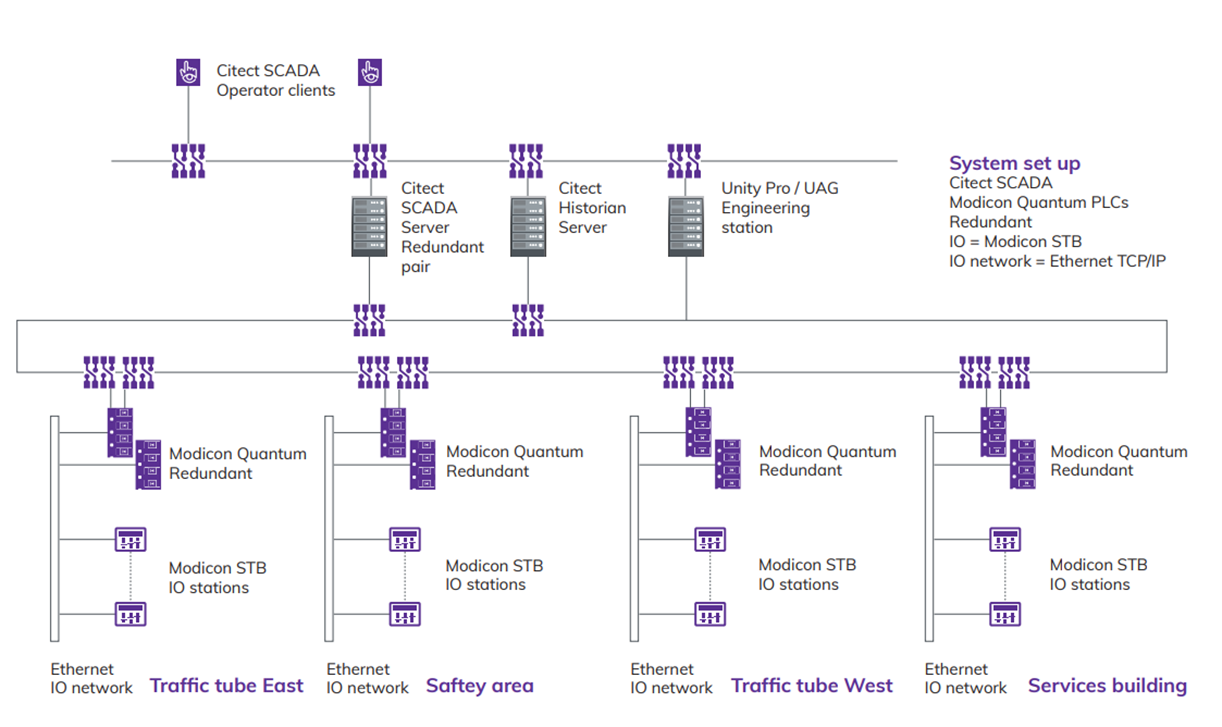
AVEVA was selected as the end-to-end solution partner to manage the efficient monitoring and control of the various tunnel and traffic-related subsystems throughout the system. With the responsibility for the entire tunnel automation and energy distribution systems, Citect SCADA was at the core of the control system with redundant Citect SCADA servers integrated with hot standby Quantum PLCs. With the complexities of the “LTS” tunnel standard and requirements to consistently translate the standards into the PLC control system, a comprehensive software guideline was written with a dedicated library built for the equipment layer. The equipment layer was then generated from the central design database with the functional specification translated directly into the software.
An Integrated Tunnel Control System
- Citect SCADA redundant servers
- CitectHistorian
- Modicon Quantum PLCs (7 redundant PLCs with hot standby and 3 single PLCs)
- Modicon STB I/O (300 STBNIC2212 | 10,000 I/O)
- Unity Application Generator (UAG) and EcoStruxure Control Expert (formerly Unity Pro)
- M580 PLCs and Magelis HMI
- Ethernet IP and Modbus TCP
- MV transformers and switchgear
- LV iPCC, LV distribution and Altivar drives
- UPS
- Sensors (>1000)
Central Command Rooms -The Brains of the Tunnel
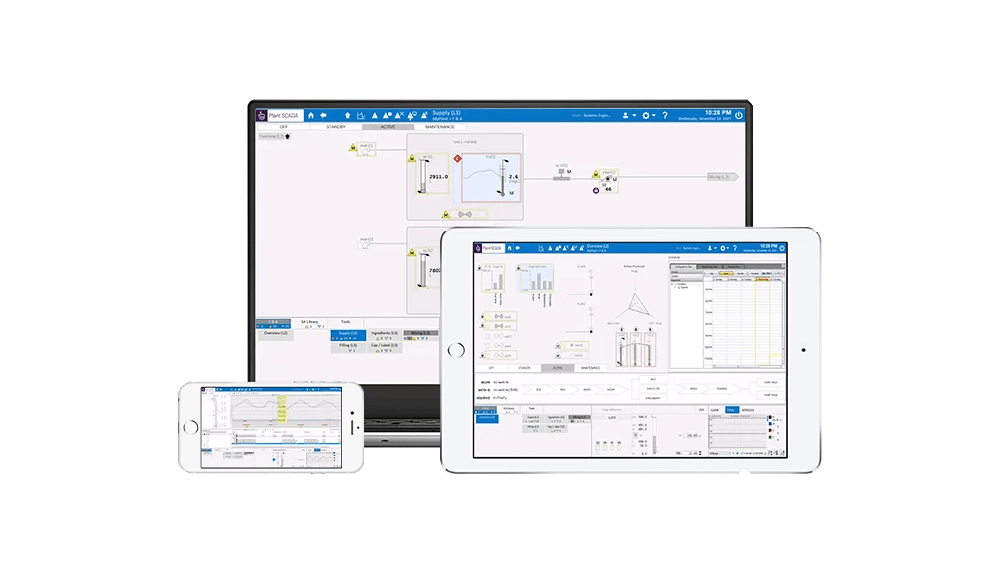
The A2 tunnel has 2 main command rooms, one in a service building in the south and one to the north. Both are known as the ‘brains of the tunnel’ given their role in managing the data convergence for the entire tunnel system and the monitoring and controlling of more than 50 tunnel and traffic-related systems. The tunnel’s Citect-based SCADA control system ensures that the vast volume of information that is being monitored is seamlessly displayed to operators in a user-friendly graphical interface on workstations in both control rooms. Operators can view the system status in real-time, taking swift corrective action as needed on any of the tunnel and traffic-related technical subsystems being remotely controlled. The combination of Citect SCADA and Quantum PLCs were selected due to their high-level availability and reliability, with the PLCs configured using Schneider Electric’s EcoStruxure Control Expert software (formerly Unity Pro). With system failures out of the question in such a critical application, the solution’s robustness and adherence to the stringent standards was instrumental in it’s success in being selected for the project.
Collaboration – Key to Project’s Success
The close collaboration and transparency between all parties involved in the A2 project, was also vital to its success. From the outset and throughout the comprehensive planning period all parties were aligned on the objectives and committed to the delivery of the tunnel within the set timeframe and allocated budget. Schneider Electric’s willingness to go beyond being just a solution partner to actively collaborating within the project team ensured the project was delivered successfully and on time.
When development for Europe’s first double-decker tunnel began, AVEVA’s SCADA software played a vital role at the heart of the project.
Learn more about the project
Why was a centralized tunnel control system required for the Maastricht A2 project?
The Maastricht A2 tunnel project required a comprehensive monitoring and control system capable of managing more than 50 tunnel and traffic-related subsystems. These included energy supply, lighting, ventilation, CCTV surveillance, fire alarm systems and emergency stations.
The objective was to ensure the safe transit of more than 45,000 vehicles per day while complying with the Dutch National Tunnel Standard (LTS). A centralized control system also enabled operators to monitor tunnel operations in real time from the two main command rooms located north and south of the tunnel infrastructure.
What role did Citect SCADA play in the Maastricht A2 tunnel project?
Citect SCADA, now known as Plant SCADA, was at the core of the tunnel control system. The platform was used to monitor and control the various tunnel and traffic-related subsystems across the infrastructure.
The solution included redundant Citect SCADA servers integrated with Modicon Quantum PLCs configured in hot standby. Operators used the SCADA interface to visualize system status in real time and take corrective action when necessary.
The project also required ergonomic HMI capabilities, with screen call-up times not exceeding one second according to project specifications.
How did the project address the requirements of the National Tunnel Standard?
The unique design of the tunnel led the Dutch Ministry of Infrastructure and the Environment to introduce the Landelijke Tunnel Standard (LTS), which defined strict operational efficiency and safety requirements.
According to the project information, the tunnel control system successfully satisfied more than 10,000 requirements from the National Tunnel Standard. To support implementation, a dedicated software guideline and equipment library were developed to consistently translate the functional specifications into the PLC control system.
More than 50 technical installations were implemented in accordance with the LTS standard throughout the project.
Why was system redundancy important for the tunnel infrastructure?
The project specified high availability and real-time redundancy requirements because tunnel closure could result in significant fines.
To address these constraints, the automation architecture included redundant Citect SCADA servers and seven redundant Modicon Quantum PLCs configured with hot standby functionality.
The solution was designed to support continuous monitoring and control of the tunnel systems while meeting the operational reliability requirements defined for the project.
What were the main results achieved by the Maastricht A2 tunnel project?
According to the project results, the tunnel was delivered on time and on budget. The infrastructure also enabled approximately 80% of peak-hour traffic congestion to be diverted.
Since the opening of the Koning Willem-Alexander tunnel in December 2016, cross-city travel time was reduced from more than 30 minutes to approximately five minutes.
The project was also part of a broader sustainability plan for the city of Maastricht, including the redevelopment of green public space above the tunnel.