At Factory Software, we support our customers every day and work together to develop innovative projects. Our teams collaborate closely with you to understand your specific requirements and deliver the best solutions. With a community of over 600 system integrators, we are your reliable and dedicated partner for success. Let’s create the extraordinary together.
Specialized in AVEVA industrial software solutions, Factory Software supports industrial companies in their digitalization, industrial supervision, and operational performance projects across Europe.
Quickly create, deploy, and scale applications tailored to your processes, equipment, and operators. With Tulip, gradually digitize your operations, connect the shop floor to your industrial systems, and build solutions that evolve as your needs change.
Put the operator at the heart of your Composable MES
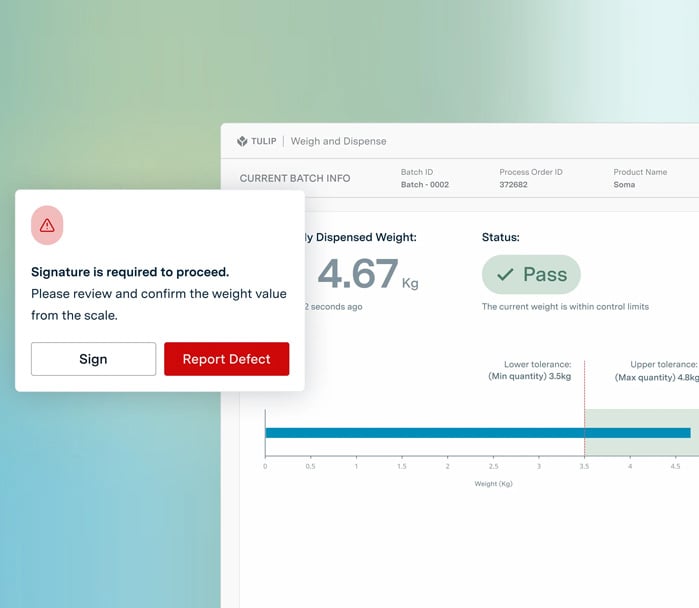
Tulip is a Frontline Operations platform that allows you to build an MES tailored to your operational needs, rather than imposing a one-size-fits-all system. With modular, human-centered applications, your teams can gradually digitize production operations: work instructions, production tracking, quality control, traceability, assembly, testing, and data collection.
Open and flexible, Tulip connects operators, machines, and existing systems within a single environment. You start with priority use cases, quickly deploy an initial solution, and then add new applications and features as your needs evolve.
Audit-ready. Designed to evolve.
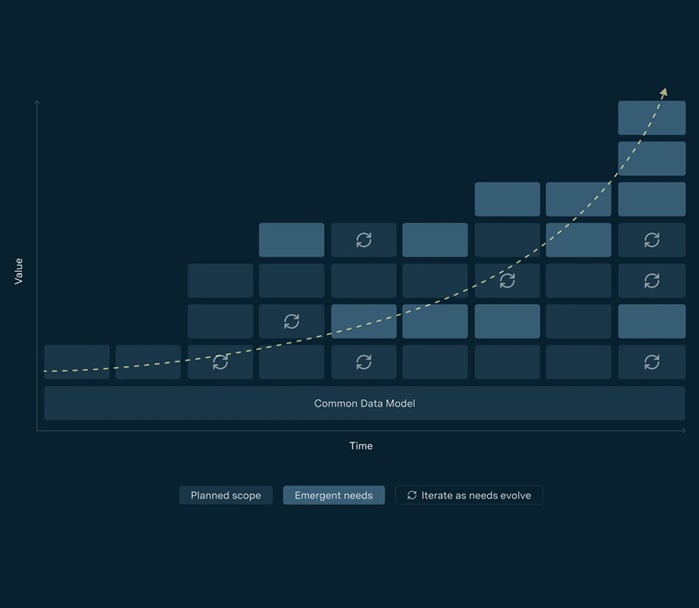
With a composable MES approach, you no longer need to build everything all at once. Start with the use cases that generate the most value, leverage a common architecture, and then gradually expand your applications as your needs evolve.
Start where the value is immediate
Start by focusing on your most critical operations. Quickly roll out an initial, high-impact use case, validate its value in the field, and achieve results without waiting for a full MES to be implemented.
Build on a common foundation
Each new application builds on what already exists. Data, integrations, security, and governance are shared: you reuse what already works to accelerate each new use case.
Expand without starting from scratch
Gradually scale up from proof-of-concept to industrial-scale operations. Deploy your solutions across new production lines, new workshops, or new sites while maintaining consistency, control, and adaptability.
Drive continuous transformation with a composable platform
Transform your processes, procedures, data, and on-the-ground expertise into modular applications tailored to the realities of your operations. With Tulip, quickly create solutions centered on operators’ needs, connect them to your existing systems, and continuously evolve them—without being tied to the development cycles of a traditional MES.
AI Designed for Industrial Operations
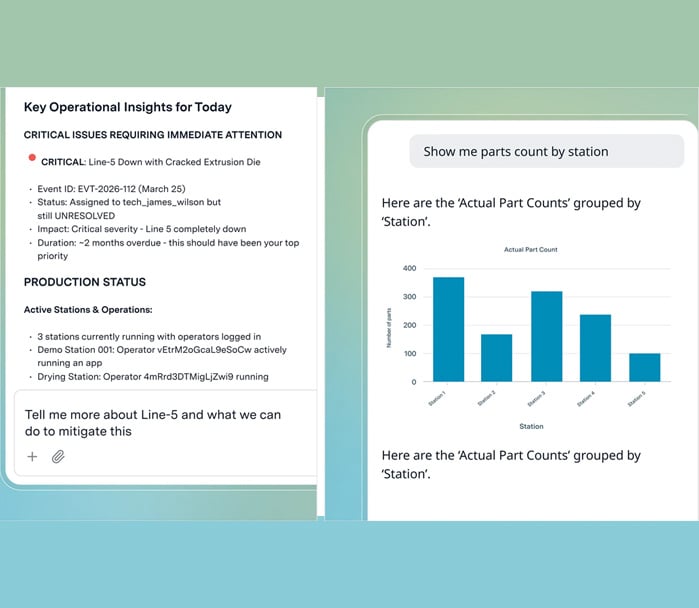
Integrate AI directly into the core of your Tulip applications to assist operators with their daily tasks. Translate instructions, analyze field data, extract useful insights, and create AI assistants and agents tailored to your processes—all while maintaining control over their actions and their access to data.
Machine data transformed into concrete actions
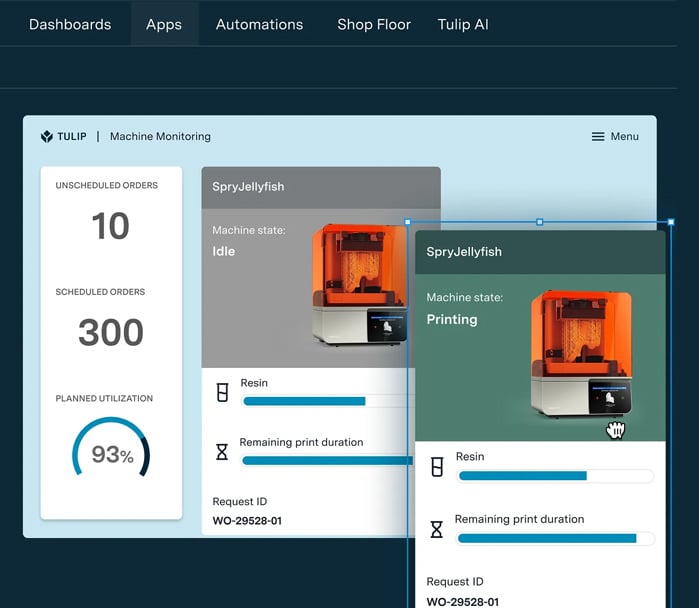
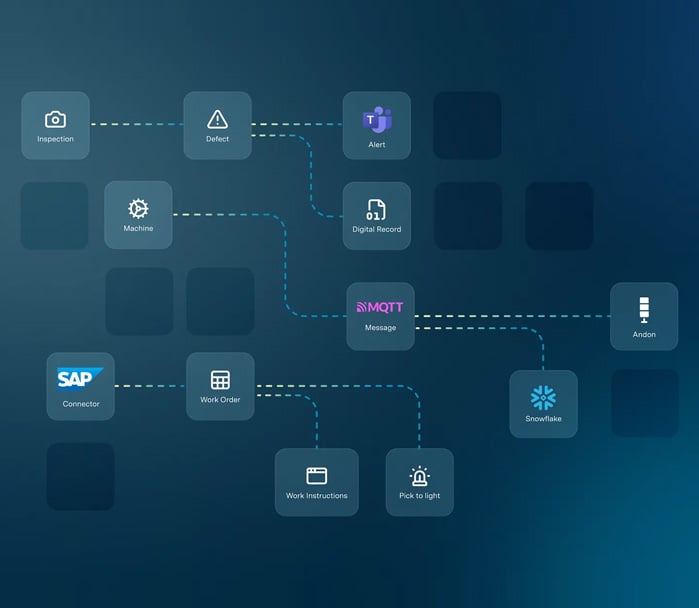
Connect your machines, equipment, and industrial systems to your Tulip applications to directly leverage field data. Automate data collection, contextualize it with data from your ERP, WMS, and other enterprise systems, and transform it into actionable insights to manage operations, automate workflows, and power AI.
Stay in control every step of the way
Precisely control who can create, edit, approve, and deploy your Tulip applications using governance rules tailored to your organization. Track versions, automate audit trails, and apply consistent approval workflows across all your teams and sites to ensure controlled, traceable, and compliant operations.
Compliance Integrated into Your Operations
Rely on a platform designed to meet the requirements of regulated industrial environments. Tulip simplifies the management of critical data, standardizes data entry, and tracks exceptions, all while maintaining a complete and traceable digital record to speed up validations and help you prepare for audits with confidence.
Move quickly from idea to value
Accelerate the deployment of your first Tulip applications with expert guidance. Identify priority use cases, quickly design and deploy operational MVPs, and then build your teams’ skills so they can independently evolve their applications and gradually scale the approach to a larger scale.
Webinar Replay
Go from an idea to a working solution in just a few months
"MES projects shouldn't take years to produce their first results. In this webinar, I'll show you how a composable approach enables manufacturers to get started faster, reduce implementation risks, and build an MES that evolves with their business."
Eric Van Nispen
European Lead: Composable MES, Industrial Data, and AI
From Monolithic MES to Composable MES
Traditionally, an MES project involves defining a comprehensive functional scope before building and deploying the solution. This approach can lead to lengthy and complex projects that require significant investment even before on-the-ground teams can realize the benefits.
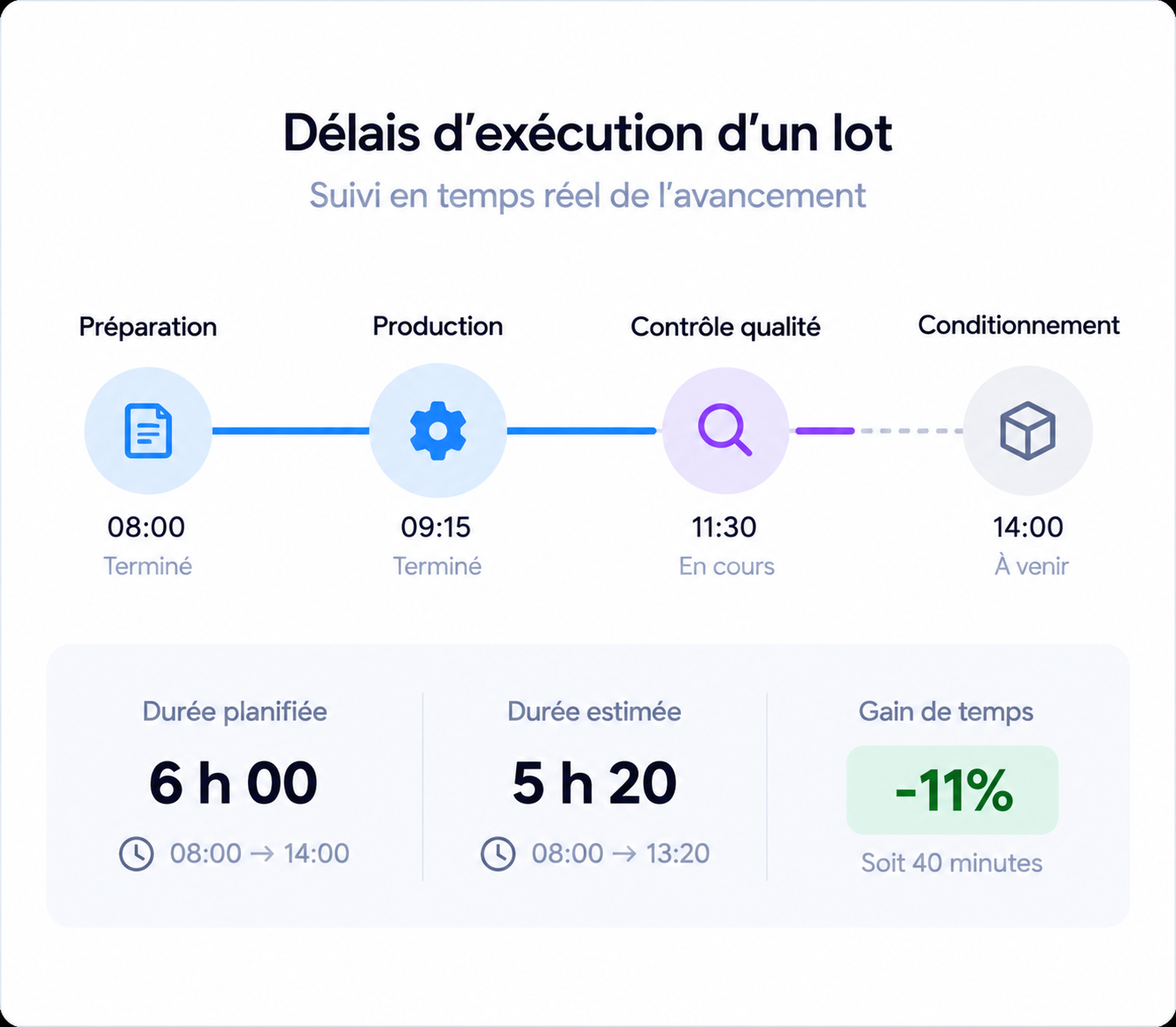
The Composable MES approach reverses this logic. With Tulip, you can start with a high-value operational use case and quickly build the application your teams actually need: digital work instructions, production tracking, quality control, traceability, downtime management, or performance monitoring. Once the value has been demonstrated, new applications can be added and interconnected to gradually cover other processes, production lines, workshops, or sites.
Tulip thus allows you to build your MES environment step by step: you realize value faster, reduce risks, and scale your applications in line with your operations and priorities.
Frequently Asked Questions about Tulip Composable MES
Should you replace your existing MES to switch to a composable MES?
No. One of the principles of the composable MES is precisely the ability to move forward gradually, without necessarily replacing your entire existing system.
With Tulip, you can start with an initial use case—digital work instructions, production tracking, quality, traceability, performance, or downtime management—by leveraging existing applications or quickly creating an application tailored to your processes.
These applications can be connected to your equipment and your existing industrial information system, then gradually expanded to address new needs, production lines, or sites.
Factory Software supports manufacturers throughout this process, from identifying initial use cases to designing, integrating, and deploying Tulip applications within a composable MES architecture.
How does Tulip enable the development of a composable MES?
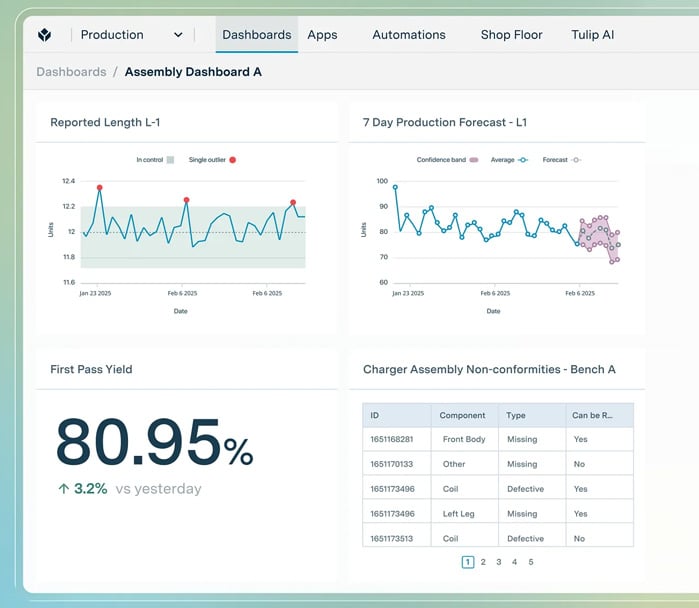
Tulip offers composable applications and application suites that enable users to progressively implement the key functions of an MES: production monitoring, quality control, traceability, work instructions, performance tracking, and equipment management.
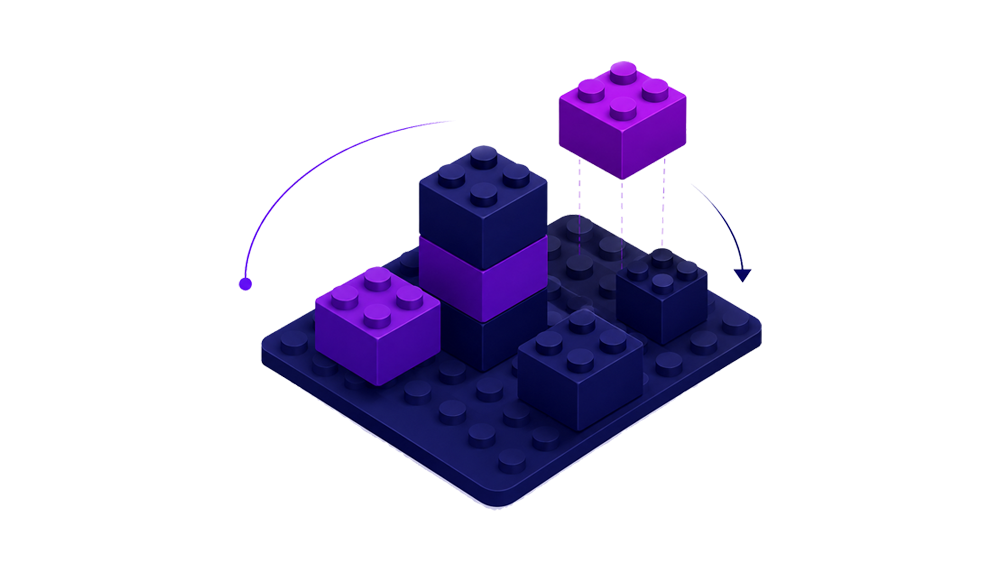
These applications are based on a common architecture and data model. As a result, they can be used independently, combined with one another, and adapted to the specific processes of each industrial site.
Ready-to-use application templates also allow users to get started quickly without starting from scratch, and then customize and enhance the solution as needs arise.
Factory Software supports manufacturers in selecting, customizing, integrating, and deploying these Tulip applications to build a composable MES tailored to their operations.
How does Tulip help you maintain control over applications and data?
Tulip allows you to precisely define who can view, create, edit, approve, or deploy applications, thanks to granular management of roles, permissions, and workspaces.
Central teams can thus define rules for governance, security, integration, and data management, while giving local teams the autonomy they need to adapt their applications to their operational needs.
Factory Software supports manufacturers in implementing this Tulip governance framework, enabling the large-scale deployment of composable applications while maintaining oversight, consistency, and control.
Is Tulip suitable for regulated industries and GxP requirements?
Yes. Tulip is designed for use in regulated industrial environments, particularly in the pharmaceutical and life sciences sectors. The platform provides the features needed to support GxP requirements, including traceability, access management, data integrity, and audit trails.
Tulip also supports manufacturers in their efforts to comply with requirements such as FDA 21 CFR Part 11 and Annex 11 of the European Union’s Good Manufacturing Practices (GMP).
Factory Software assists manufacturers in deploying Tulip applications within their regulated environments by incorporating compliance and validation requirements from the very beginning of the application design process.