



<img alt="" src="https://intelligentintuitiveintelligent.com/820172.png" style="display:none;">
Search Contact

MES Composable

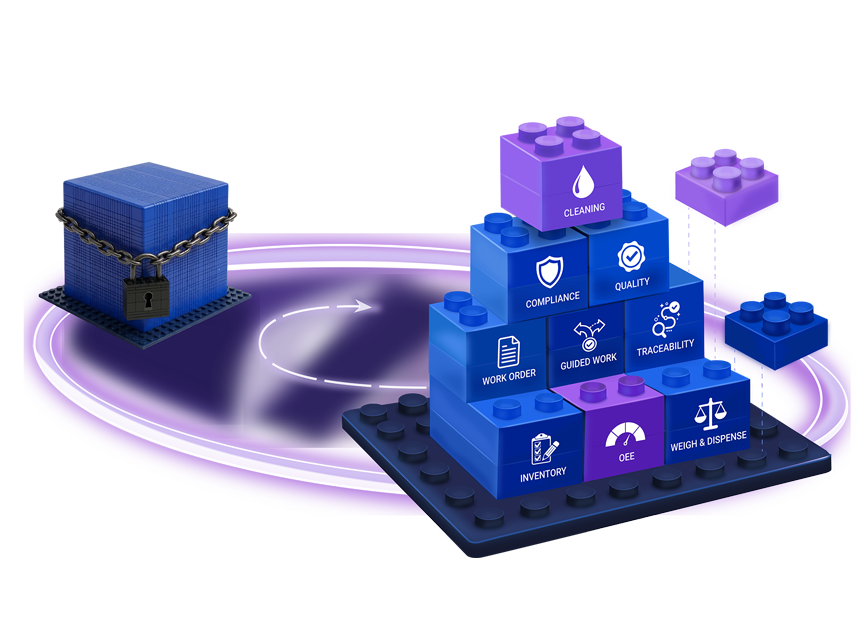
Deploy faster, start with your priorities, and scale your MES as your needs evolve. With a composable approach, you can move forward one use case at a time, reduce the complexity and risks of your projects, and achieve tangible results without waiting for a comprehensive system to be deployed.

MES-COMPOSABLE
Overview

Production systems that evolve at the same pace as your business

The Composable approach allows you to scale your MES incrementally, starting with the use cases that deliver the most value. Factory Software works with you to identify these priorities, choose the right approach, and quickly deploy an initial solution, before gradually expanding it to address other needs, production lines, or sites.

To build this architecture, we rely on two complementary approaches: AVEVA Composable MES, with proven and modular MES functions to structure and manage production processes, and Tulip, with flexible applications focused on shop-floor operations and operators. Our role: to combine technology, industrial expertise, and support to build a Composable MES tailored to your environment and capable of evolving with your needs.

operation-my-composable

From a Monolithic MES Project to a Composable Approach

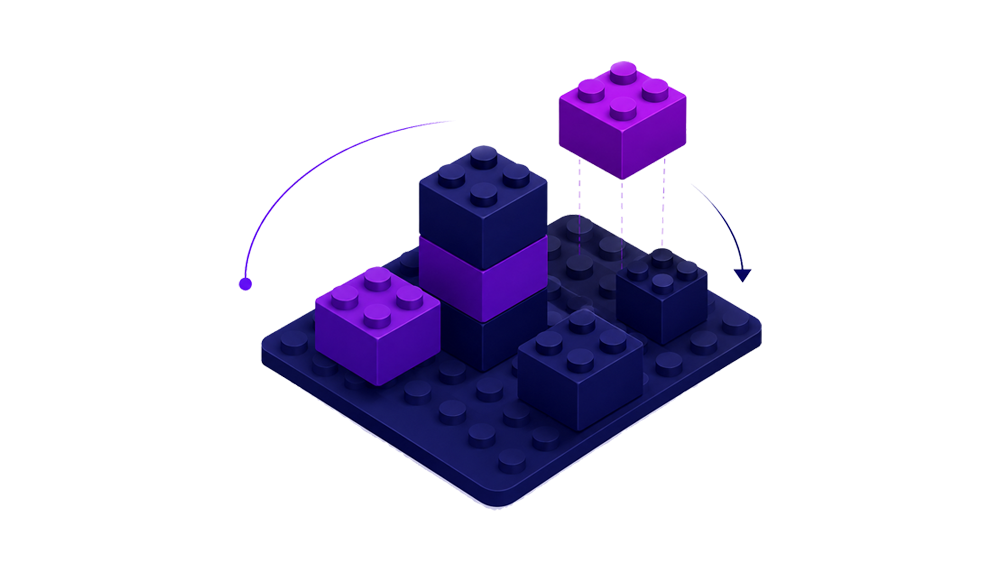
For years, MES projects have been conceived as large-scale transformation initiatives: defining all requirements, building a comprehensive solution, and then deploying it on a large scale. This approach can result in lengthy and complex projects that are difficult to adapt, requiring significant investment even before the first results are achieved.

The Composable approach changes this mindset. Rather than trying to deploy everything at once, you start with a high-value operational need, implement the necessary MES functions or applications, and see results within a few weeks or months. Once value has been demonstrated, you can add new use cases and gradually extend the solution to other production lines, workshops, or sites.

This reduces risk and accelerates your return on investment, while building an MES environment capable of evolving with your needs.

monolithic-composable-systems

A step-by-step approach, tangible results

composable-application---identifier

Identify your priority

Select one or two use cases that will add the most value to your production.
composable-application--deploy

Deploy and measure

Deploy the necessary MES functions or applications within an initial scope and quickly measure the results achieved.
composable-application--extend

Extend gradually

Enhance your environment with new features and gradually expand it to other product lines, workshops, or locations.

Examples of MES Use Cases

Operations Management
Manage and coordinate all your production operations in real time. Track the progress of work orders, monitor the various stages of the process, and gain a clear overview of operations to improve performance and respond quickly to production issues.
Performance Management
Measure and analyze the performance of your operations in real time. Track your key production metrics, identify losses, downtime, and sources of inefficiency to improve your OEE and implement continuous improvement initiatives.
Quality Management
Control quality throughout your production processes. Digitize inspections, track results and nonconformities, ensure compliance with procedures, and maintain full traceability to guarantee your products’ compliance.
Standardization and Automation of Operational Processes
Standardize your work methods and automate operational processes to ensure consistent and controlled execution. Guide operators through each step, reduce manual tasks and the risk of errors, and ensure compliance with best practices across all your production lines and sites.
Production Planning, Scheduling, and Execution
Plan and organize your production based on priorities, resources, and operational constraints. Schedule production orders, coordinate their execution on the shop floor, and track their progress in real time to better meet your production goals and deadlines.

Start with the use case that provides the most value

You don’t need to digitize everything all at once. Identify a priority need in your production process and deploy the MES functions or applications necessary to address it. Once the value has been demonstrated, you can gradually expand your environment to include new use cases.

Talk to an expert

Production Execution and Monitoring

Digitize the execution of work orders, track their progress, and gain a real-time view of your production.

Traceability & Genealogy

Track materials, components, batches, and products throughout the process to ensure complete traceability of your production.

Quality & Compliance

Digitize quality control processes, record results and defects, and ensure compliance with your procedures and regulatory requirements.

Digital Work Instructions

Guide operators step by step with digital instructions tailored to the product, the work order, or the current operation.

Performance & OEE

Collect and contextualize production data to track your performance, identify losses, and improve your TRS/OEE.

Assembly & Guided Operations

Make manual operations and assembly safer by guiding the operator and connecting tools, scanners, sensors, and workstation equipment.

Materials, Batches, and Weighing

Digitize material consumption, weighing, and distribution processes while ensuring their identification and traceability.

Andon & Incident Management

Enable operators to immediately report a problem, alert the appropriate teams, and track its resolution directly from the field.

Data Collection & Contextualization

Connect machines, equipment, and operators to collect production data and place it in context: order, product, batch, operation, or equipment.
Guide

A Composable approach tailored to your operations

Depending on your processes, constraints, and objectives, we’ll guide you toward the composable approach best suited to your operations—or a combination of the two.
Background & Needs AVEVA MES TULIP

Environment Type

Production process (whether batch or hybrid) that is generally structured and highly automated. Discrete manufacturing, assembly, or manual operations, with a high degree of operator interaction.
Starting Point The production process and its model: products, orders, materials, equipment, batches… The Operator and His or Her Workstation: Tasks, Instructions, Checks, Equipment…
Primary Need Structure and execute production processes using proven, modular MES functions. Quickly digitize field operations with apps tailored to every need.
Typical Use Cases Production execution, traceability and product history, quality, weighing, batches, materials, OEE… Work instructions, guided assembly, monitoring and inspection, testing, Andon, collection of operator and equipment data…
Webinar Replay

Go from an idea to a working solution in just a few months

Watch the webinar replay
eric-van-nispen
"MES projects shouldn't take years to produce their first results. In this webinar, I'll show you how a modular approach enables manufacturers to get started faster, reduce implementation risks, and build an MES that evolves with their business."

Eric Van Nispen

European Lead: Composable MES, Industrial Data, and AI

What if your MES could create value in a matter of months, rather than over several years?

Learn how a composable MES accelerates deployments, simplifies upgrades, reduces risks, and prepares your operations for AI.

Download the White Paper
whitepaper-my-composable2
FAQ

Learn more before launching your MES Composable project

What is a composable MES, and how does it differ from a traditional MES?

A composable MES allows companies to build and evolve their production management system incrementally, using functions or applications that address specific needs. Rather than deploying a comprehensive MES project all at once, manufacturers can start with a priority use case, measure the results achieved, and then gradually expand the solution to other processes, production lines, or sites. This approach helps reduce complexity and risks while accelerating time-to-value.

What are the benefits for a manufacturer of implementing a Composable MES?

A composable MES allows you to digitize and scale up production gradually, starting with the use cases that deliver the most value. Rather than immediately launching a comprehensive MES project, you can roll out an initial scope, measure the results, and then expand the solution to address other needs, production lines, or sites. Factory Software works with you to identify these priorities, define the appropriate architecture, and translate this approach into concrete applications within your industrial environment.

Is it possible to deploy a Composable MES without replacing existing systems?

Yes. A Composable architecture can be integrated gradually into your existing environment: ERP, MES, PLCs, equipment, data loggers, and other industrial applications can continue to function as usual. The challenge is to connect new capabilities where they add value. Factory Software helps you build this architecture, integrate the various technological building blocks, and preserve existing investments where appropriate.

What is the difference between AVEVA Composable MES and Tulip?

AVEVA Composable MES is more focused on production processes, with MES functions designed for execution, traceability, product lineage, quality, and materials management. Tulip Frontline Operations Platform is more focused on field operations and operators, with applications for work instructions, assembly, inspections, testing, and data collection. Factory Software distributes and manages both of these approaches: our experts analyze your environment and use cases to guide you toward AVEVA, Tulip, or a combination of both when appropriate.

Which use case should you start with when launching a Composable MES project?

The best starting point is usually a clearly identified operational need that can quickly generate value: traceability, quality, production order tracking, performance, digital instructions, manual operations, or data collection, for example. Factory Software helps you identify and prioritize these use cases, then implement an initial scope to demonstrate value before gradually expanding the solution.

Why choose Factory Software to build your Composable MES?

Because a Composable project isn’t just about choosing software. It requires understanding industrial processes, identifying the right use cases, selecting the appropriate technologies, integrating them into the information system, and defining a coherent deployment roadmap. As a distributor of AVEVA Composable MES and Tulip solutions, Factory Software supports manufacturers from the requirements definition phase through to the deployment and evolution of their environment, with an approach centered on needs and processes rather than on the product itself.